

The latest news stories across the state of Oregon from the digital home of the Oregon coastal cities, OregonBeachMagazine.com
Wednesday, December 17, 2025
Oregon Beach Weather


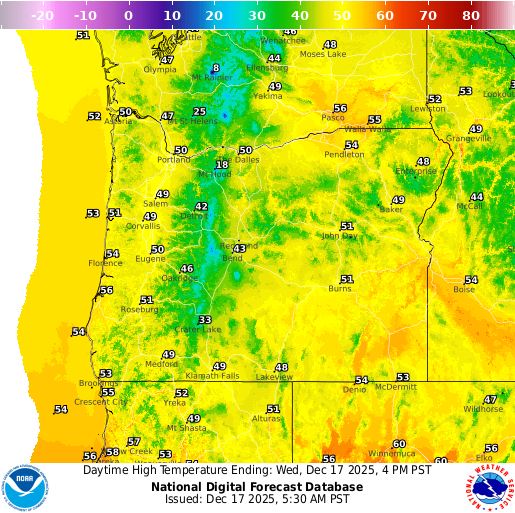

Winter is coming! Here’s the overview of our winter outlook, but be sure to check out what we’re predicting in your area: https://www.farmersalmanac.com/extended-forecast

 Turn Around. Don’t Drown.
Flooded roads can be deeper, faster, and more dangerous than they look. Never drive around barricades—they’re there to protect you. Just 12 inches of moving water can sweep away a vehicle, and the road beneath may be washed out.
If you see water on the road:
Stop. Turn around. Choose another route.
Follow posted closures and barricades.
Check conditions before you go.
Your safety—and the safety of first responders—depends on it.

High Winds and Rain Hit the Coast Hard
 𝗖𝗢𝗨𝗡𝗧𝗬𝗪𝗜𝗗𝗘 𝗪𝗜𝗡𝗗 𝗘𝗩𝗘𝗡𝗧 𝗔𝗡𝗗 𝗣𝗢𝗪𝗘𝗥 𝗢𝗨𝗧𝗔𝗚𝗘𝗦 We are aware of impacts and power outages in Seaside and countywide due to excessive winds overnight and understand the frustration and inconvenience this causes. Please do NOT call 9-1-1 or the Police non-emergency line for power outage updates, restoration timelines, or other utility-related issues. Those calls should be directed to your service provider.Keeping these lines clear allows first responders to better assist with true emergencies, including:* Life-threatening situations* Medical emergencies* Fires or downed power lines* Situations where immediate police, fire, or medical response is needed. Thank you for your patience and for helping ensure emergency services remain available for those who need them most.
POWER OUTAGE MAP > https://poweroutage.us/area/state/oregon

State Agencies Urge Caution as Landslide Risk Intensifies in Lincoln County and Across Western Oregon
The Oregon Department of Emergency Management (OEM), the Department of Land Conservation and Development (DLCD), and the Oregon Department of Geology and Mineral Industries (DOGAMI) are urging residents and visitors to remain vigilant as landslide hazards increase across western Oregon, particularly in Lincoln County, where a significant landslide event continues to pose serious safety risks.
The landslide, which began on December 12, has destabilized the terrain in the affected area. The ground remains highly unstable, and the approaching atmospheric river is expected to worsen conditions. Oregon Department of Transportation geologists and engineers have been conducting aerial assessments using LIDAR and drone technology but have not been able to safely enter the site due to ongoing ground movement.
Public Safety Warning for Lincoln County:
- Stay out of the landslide area, including the slope above and surrounding terrain. The ground is still settling and may shift without warning.
- Do not approach or disturb debris washing ashore along the Siletz River, Siletz Bay, or nearby beaches. It may be unstable and dangerous.
- If you find debris of a personal nature, please contact local law enforcement via non-emergency lines:
- Lincoln City Police Department: 541-994-3636
- Lincoln County Sheriff’s Office: 541-265-0777
- Please follow all evacuation alerts (1. Be Ready, 2. Be Set, 3. GO NOW!) and know your evacuation routes.
Emergency Response Updates:
- Lincoln County Emergency Management’s Emergency Operations Center (EOC) remains active and is coordinating with local and state partners.
- Highway 229 is closed between Milepost 14 and 15. No detour is available. Travelers should avoid the area and check TripCheck.com for updates.
Flood Watch and Landslide Risk Across Western Oregon:
The National Weather Service has issued a Flood Watch through Thursday night for multiple counties, including Benton, Clackamas, Clatsop, Columbia, Hood River, Lane, Lincoln, Linn, Marion, Multnomah, Polk, Tillamook, Washington, and Yamhill. The heaviest rainfall in Oregon will be Thursday and Friday, then will shift further south during the weekend. Heavy rainfall may trigger landslides and debris flows, especially in steep terrain and areas affected by recent wildfires.
Debris Flow Safety Tips:
- Stay alert to changing conditions. Monitor weather updates via radio, TV, or weather.gov/pqr.
- Listen for unusual sounds like cracking trees or rumbling rocks.
- Watch water sources for sudden changes in flow or color.
- Travel cautiously, especially at night. Assume roads may be compromised.
Be Prepared:
Oregon communities can reduce landslide risks through land use planning and hazard mitigation strategies. Property owners in low lying areas in and around the landslide area may wish to consider purchasing flood insurance, as it is not normally a part of standard renters or homeowners insurance. It is important to note flood insurance applies only in limited cases involving certain debris flows. It generally does not cover landslides.
However, officials do expect the atmospheric river to cause flooding in parts of Oregon, and it is a good time to make sure you have insurance coverage for both flooding and landslides. Contact your insurance agent, or connect with an insurance advocate at the Division for Financial Regulation’s.(DFR) Consumer Hotline 1-888-877-4894 or visit their Disaster Insurance Resources page.
- Preparing for Landslide Hazards: A Land Use Guide for Oregon Communities
- Quick Reference Sheet
- Homeowners Guide to Landslides for Oregon and Washington
- DOGAMI landslide publications and maps
- Anyone (whether you rent or own) can obtain a National Flood Insurance Program quote
- Contact your local insurance agent or visit FloodSmart.gov for additional information on flood insurance.
Stay Informed:
- Lincoln County Sheriff’s Office
- Sign up for Lincoln Alerts to receive emergency notifications:
- Receive County Media Releases
- Facebook Pages: https://www.facebook.com/lincolncountysheriff/ or www.facebook.com/lcemergencymanagement/
- Sign up for OEM Press Releases or Alerts in your area at ORAlert.gov
- Stay up to date on road conditions by calling 511 or visiting TripCheck.com.
- Visit DOGAMI’s home page and debris flow page for more information.
- Photos and video of the slide can be found on ODOT’s Flickr Album.
High wind watch for South Central Oregon Coast and Curry County Coast for Thursday
Landslides force closure of some State Parks on Oregon coast
Ecola State Park remains closed after landslides blocked roads, forcing hikers to change their plans as another atmospheric river heads toward the Oregon coast.

Highway 229 Landslide Update

The landslide is still settling and has destabilized the terrain in the affected area. The impacted area remains in a LEVEL THREE – GO NOW evacuation order. Due to the dangerous nature of the situation and unstable ground, community members are asked to stay out of the impacted area. Accessing these areas put yourself and first responders at risk. Heavy rains are expected to worsen conditions and carry additional risk.
Local and state partners are monitoring the slide and are making plans for emergency response as the situation develops. Experts are not able to fully assess the full impact of this landslide until it has settled and is stable.

Debris from the landslide has entered the Siletz River and is washing up along the riverbanks, Siletz Bay, and ocean beaches. Community members should use caution if they choose to climb on, move, or disturb debris. It may be unstable or hazardous. With the loss of two homes, personal items may also begin to appear. Sheriff Shanks commented “Our community members are eager to help comfort those that have lost their homes and are motivated to clean up some of the debris.” During this period of uncertainty with the landslide and expected weather, it is crucial community members remain safe. “We share empathy for those affected and ask that any found personal items or items of value be reported to local law enforcement so we can work on returning meaningful possessions to our community members.” Sheriff Shanks said.
If you discover items with personal identification or items that appear to be personal belongings, please report them to local law enforcement through the non-emergency line:
- Lincoln City Police Department non-emergency: 541-994-3636
- Lincoln County Sheriff’s Office non-emergency: 541-265-0777
There currently no threats to Public Drinking Water Systems positioned downstream from the slide on Hwy 229. Oregon Drinking Water Services through Oregon Health Authority (OHA) continues to monitor the public drinking water system for safety. If your domestic well may have been compromised or you are unsure of your water quality follow these steps from OHA: www.oregon.gov/oha/ph/healthyenvironments/drinkingwater/operations/pages/shockchlorination.aspx
Lincoln County Emergency Management’s EOC remains active and is coordinating with local and state partners on the developing situation. Updates will be provided as they become available.
Additional Information on the Landslide or to Inform Your Safety and Travel Plans:
- Lincoln County Sheriff’s Office
- Sign up for Lincoln Alerts to receive direct updates: member.everbridge.net/892807736721689/notif
- Media Releases: flashalert.net/id/LCSO
- Facebook Pages: https://www.facebook.com/lincolncountysheriff/www.facebook.com/lincolncountysheriff/ or www.facebook.com/lcemergencymanagement/
- Monitor weather conditions at weather.org
- Follow updates from ODOT:
- ODOT News Releases: www.oregon.gov/odot/pages/news-releases.aspx
- ODOT Facebook Page: www.facebook.com/OregonDOT
The site is still active and can be dangerous. Avoid the impacted and surrounding area. Ten homes were placed on evacuation notice. Occupants that remain in the hazard area were issued additional evacuation recommendations on December 12, 2025.
Three structures, including two homes, have been damaged in the landslide. Community members are encouraged to use extreme caution in and around the Siletz River to avoid risk of injury from debris and dangers associated with the heightened river level.
There have been reports of debris washing up on the shores of the river, the Siletz Bay, and ocean beaches. Community members are encouraged to avoid climbing on or moving the debris. Any discovery of items with personal identification should be reported to local law enforcement.
Oregon Department of Transportation (ODOT) has reported it is unknown how long the Highway 229 closure will last and that geotechnical crews need time to assess the slope and determine next steps before a timeline can be established.
Please be aware that there is no nearby detour available. Travelers should avoid the area and plan alternate routes. We’ll continue to monitor conditions and will share updates as more information becomes available. Travelers are encouraged to check TripCheck.com for the latest road conditions before heading out.
Additional Information on the Landslide or to Inform Your Safety and Travel Plans:
- Weather: www.weather.org
- Road closures: tripcheck.com
- Lincoln County Emergency Alerts: sign up to receive messages directly – member.everbridge.net/892807736721689/notif
- Oregon Department of Transportation (ODOT): www.oregon.gov/odot/pages/news-releases.aspx
 Landslide Update – Community Alert
Heartwrenching finds on Taft today, as debris from some people’s homes – lost in the Siletz River flood – ended up in Siletz Bay today.

Debris from the Highway 229 landslide is washing up along the Siletz River, Siletz Bay, and nearby beaches.
If you come across personal items like photos or documents, please report them to law enforcement and provide a description of the item and where it was found.
 Call Lincoln County Sheriff’s Office non-emergency: 541-265-0777 Call City of Lincoln non-emergency: 541-994-3636 — Stay safe and stay informed:
https://www.co.lincoln.or.us/789/Lincoln-AlertsLincolnCounty #LandslideUpdate#CommunitySafety#ReportDebris
Astoria Hospital Races To Build a Tsunami Shelter as FEMA Fights to Cut Funding
Residents of this small coastal city of Astoria in the Pacific Northwest know what to do when there’s a tsunami warning: Flee to higher ground.

For those in or near Columbia Memorial, the city’s only hospital, there will soon be a different plan: Shelter in place. The hospital is building a new facility next door with an on-site tsunami shelter — an elevated refuge atop columns deeply anchored in the ground, where nearly 2,000 people can safely wait out a flood.
Oregon needs more shelters like the one that Columbia Memorial is building, emergency managers say. Hospitals in the region are likely to incur serious damage, if not ruin, and could take more than three years to fully recover in the event of a major earthquake and tsunami, according to a state report.
Columbia Memorial’s current facility is a single-story building, made of wood a half-century ago, that would likely collapse and sink into the ground or be swallowed by a landslide after a major earthquake or a tsunami, said Erik Thorsen, the hospital’s chief executive.
“It is just not built to survive either one of those natural disaster events,” Thorsen said.
At least 10 other hospitals along the Oregon coast are in danger as well. So Columbia Memorial leaders proposed building a hospital capable of withstanding an earthquake and landslide, with a tsunami shelter, instead of relocating the facility to higher ground. Residents and state officials supported the plans, and the federal government awarded a $14 million grant from the Federal Emergency Management Agency to help pay for the tsunami shelter.Columbia Memorial Hospital is a single-story, wood-frame building that would likely sustain significant damage in an earthquake or tsunami. The hospital was awarded a $14 million FEMA grant to help pay for an elevated tsunami shelter, but the Trump administration canceled the grant program in April. Hannah Norman/KFF Health News
The project broke ground in October 2024. Within six months, the Trump administration had canceled the grant program, known as Building Resilient Infrastructure and Communities, or BRIC, calling it “yet another example of a wasteful and ineffective FEMA program … more concerned with political agendas than helping Americans affected by natural disasters.”
Molly Wing, director of the expansion project, said losing the BRIC grant felt like “a punch to the gut.”
“We really didn’t see that coming,” she said.
This summer, Oregon and 19 other states sued to restore the FEMA grants. On Dec. 11, a judge ruled that the Trump administration had unlawfully ended the program without congressional approval.
The administration did not immediately indicate it would appeal the decision, but Department of Homeland Security spokesperson Tricia McLaughlin said by email: “DHS has not terminated BRIC. Any suggestion to the contrary is a lie. The Biden Administration abandoned true mitigation and used BRIC as a green new deal slush fund. It’s unfortunate that an activist judge either didn’t understand that or didn’t care.” FEMA is a subdivision of DHS.
Columbia Memorial was one of the few hospitals slated to receive grants from the BRIC program, which had announced more than $4.5 billion for nearly 2,000 building projects since 2022.
Hospital leaders have decided to keep building — with uncertain funding — because they say waiting is too dangerous. With the Trump administration reversing course on BRIC, fewer communities will receive help from FEMA to reduce their disaster risk, even places where catastrophes are likely.
More than three centuries have passed since a major earthquake caused the Pacific Northwest’s coastline to drop several feet and unleashed a tsunami that crashed onto the land in January 1700, according to scientists who study the evolution of the Oregon coast.
The greatest danger is an underwater fault line known as the Cascadia Subduction Zone, which lies 70 to 100 miles off the coast, from Northern California to British Columbia.Astoria, Oregon, is a city of 10,000 residents on a peninsula near the end of the Lewis & Clark National Historic Trail. It’s located on the southern shore of the Columbia River, near the Washington border. Picturesque forests and the river frame streets lined with gift shops, hotels, and seafood restaurants — almost entirely in an evacuation zone. Hannah Norman/KFF Health News
The Cascadia zone can produce a megathrust earthquake, with a magnitude of 9 or higher — the type capable of triggering a catastrophic tsunami — every 500 years, according to the U.S. Geological Survey. Scientists predict a 10% to 15% chance of such an earthquake along the fault zone in the next 50 years.
“We can’t wait any longer,” Thorsen said. “The risk is high.”
Building for the future
The BRIC program started in 2020, during the first Trump administration, to provide communities and institutions with funding and technical assistance to fortify their structures against natural disasters.
Joel Scata, a senior attorney with the environmental advocacy group Natural Resources Defense Council, said the program helped communities better prepare so they could reduce the cost of rebuilding after a flood, tornado, wildfire, or extreme weather event.
To qualify for a grant, a hospital had to show that the project’s benefits were greater than the future danger and cost. In some cases, that benefit might not be readily apparent.
“It prevents bad disasters from happening, and so you don’t necessarily see it in action,” Scata said.
Scata noted that the Trump administration has also stopped awarding grants through FEMA’s Hazard Mitigation Grant Program, which predates BRIC.
“There really is no money going out the door from the federal government to help communities reduce their disaster risk,” he said.
A recent KFF Health News investigation using proprietary data from Fathom, a global leader in flood modeling, found that at least 170 U.S. hospitals are at risk of significant and potentially dangerous flooding from more intense and frequent storms. That count did not include Columbia Memorial, as Fathom’s data did not account for tsunamis. It models flooding from rivers, sea level rise, and extreme rainfall.
In recent days, an atmospheric river — a narrow storm band carrying significant amounts of moisture — dumped more than 15 inches of rain on parts of Oregon and Washington, causing catastrophic flooding along rivers and the coast. In the Washington town of Sedro-Woolley, which sits along the Skagit River, the PeaceHealth United General Medical Center evacuated nonemergency patients.
High winds battered Astoria, leaving the city with some minor landslides, according to news reports. But flooding on the road to the nearby beach town of Seaside made the drive nearly impassable.
The Trump administration is leaning on states to take greater responsibility for recovering from natural disasters, Scata said, but most states are not financially prepared to do so.
“The disasters are just going to keep on piling up,” he said, “and the federal government’s going to have to keep stepping in.”
A hospital at risk
Columbia Memorial is blocks from the southern shore of the Columbia River, near the Washington border, where the area’s natural hazards include earthquakes, tsunamis, landslides, and floods. A critical access hospital with 25 beds, it opened in 1977 — before state building codes addressed tsunami protections.
Thorsen said the new facility and shelter would be a “model design” for other hospitals. Design plans show a five-level hospital built atop a foundation anchored to the bedrock and surrounded by concrete columns to shield it from tsunami debris.Columbia Memorial Hospital’s expansion plans call for an outdoor staircase leading to a rooftop tsunami refuge capable of holding up to 1,900 people, and enough food, water, tents, and other supplies to sustain them for five days. Columbia Memorial Hospital
The shelter will be on the roof of the second floor, above the projected maximum tsunami inundation. It will be accessible via an outdoor staircase and interior staircases and elevators, with enough room for up to 1,900 people, plus food, water, tents, and other supplies to sustain them for five days.
With most patient care provided on the second and third levels, generators on the fourth level, and utility lines underground, the hospital is expected to remain operational after a natural disaster.Design plans for Columbia Memorial Hospital show a five-level building with a rooftop refuge designed to withstand an earthquake and keep people safe from a tsunami. Most patient services will be provided on the second and third levels, above the projected tsunami flood level. Columbia Memorial Hospital
Thorsen said an earthquake and tsunami threaten not only vast flooding but also liquefaction, in which the ground loosens and causes structures above it to collapse. Deep foundations, thick slabs, and other structural supports are expected to protect the new hospital and tsunami structure against such failure.
Through the years, hospital administrators and civic leaders in Astoria have sought other locations for Columbia Memorial. But relocation wasn’t economical. Columbia Memorial committed to invest in a new hospital and tsunami shelter to protect not only patients and staff but also nearby residents.
“Your community should count on your hospital to be a safe haven in a natural disaster,” Thorsen said.
Fighting to restore funds
The estimated construction budget for Columbia Memorial’s expansion is $300 million, mostly financed through new debt from the hospital. The tsunami shelter is budgeted at about $20 million, for which FEMA’s BRIC program awarded nearly $14 million, with a $6 million matching grant from the state, which has maintained its support.
The shelter and the building’s structural protections — featuring reinforced steel, deeper foundations, and thicker slabs — are integral to the design and cannot be removed without compromising the rest of the structure, said Michelle Checkis, the project architect.
“We can’t pull the TVERS [tsunami vertical evacuation refuge structure] out without pulling the hospital back apart again,” she said. “It’s kind of like, if I was going to stack it up with Legos, I would have to take all those Legos apart and stack it up completely differently.”Molly Wing is the director of Columbia Memorial Hospital’s expansion project, and Michelle Checkis is the architect of the new facility, which includes a rooftop tsunami shelter. Hannah Norman/KFF Health News
Columbia Memorial has sought help from Oregon’s congressional delegation. In a letter to Department of Homeland Security Secretary Kristi Noem and former FEMA acting administrator David Richardson, the lawmakers demanded that the agencies restore the hospital’s grant.
The hospital’s leadership is seeking other grants and philanthropic donations to make up for the loss. As a last resort, Thorsen said, the board will consider removing “nonessential features” from the building, though he added that there is little fat to trim from the project.
The lawsuit brought by states in July alleged that FEMA lacks the authority to cancel the BRIC program or redirect its funding for other purposes.
The states argued that canceling the program ran counter to Congress’ intent and undermined projects underway.
In their response to the lawsuit, the Trump administration said repeatedly that the defendants “deny that the BRIC program has been terminated.”
The lawsuit cites examples of projects at risk in each state due to FEMA’s termination of the grants. Oregon’s first example is Columbia Memorial’s tsunami shelter. “Neither the County nor the State can afford to resume the project without federal funding,” the lawsuit states.
In response to questions about the impact of canceling the grant on Astoria and the surrounding community, DHS spokesperson Tricia McLaughlin said BRIC had “deviated from its statutory intent.”
“BRIC was more focused on climate change initiatives like bicycle lanes, shaded bus stops, and planting trees, rather than disaster relief or mitigation,” McLaughlin said. DHS and FEMA provided no further comment about BRIC or the Astoria hospital.
Preparing for a tsunami disaster
Located near the end of the Lewis & Clark National Historic Trail, Astoria sits on a peninsula that juts into the Columbia River near the Pacific Ocean.
Much of the city is not in the tsunami inundation area. But Astoria’s downtown commercial district — where gift shops, hotels, and seafood restaurants line the streets — is nearly all an evacuation zone.Fish canning was once the primary industry in Astoria, Oregon, until the last cannery closed in the 1980s. Hannah Norman/KFF Health News
Two hospitals — Ocean Beach Health in nearby Washington, and Providence Seaside Hospital in Oregon — are about 20 miles from Columbia Memorial. Both are 25-bed hospitals, and neither is designed to withstand a tsunami.
Ocean Beach Health regularly conducts drills for mass-casualty and natural disasters, said Brenda Sharkey, its chief nursing officer.
“We focus our planning and investments on areas where we can make a real difference for our community before, during, and after an event — such as maintaining continuity of care, ensuring rapid triage, and coordinating with regional emergency partners,” Sharkey said in an email.
Gary Walker, a spokesperson for Providence Seaside, said in a statement that the hospital has a “comprehensive emergency plan for earthquakes and tsunamis, including alternative sites and mobile resources.”
Walker added that Providence Seaside has hired “a team of consultants and experts to conduct a conceptual resilience study” that would evaluate the hospital’s vulnerabilities and recommend ways to address them.
Oregon’s emergency managers advise residents and visitors in coastal communities to immediately seek higher ground after a major earthquake — and not to rely on tsunami sirens, social media, or most technology.
“There may not even be cellphone towers operating after an event like this,” said Jonathan Allan, a coastal geomorphologist with the Oregon Department of Geology and Mineral Industries. “The earthquake shaking, its intensity, and particularly the length of time in which the shaking persists, is the warning message.”
The stronger the earthquake and the longer the shaking, he said, the more likely a tsunami will head to shore.
A tsunami triggered by a Cascadia zone earthquake could strike land in less than 30 minutes, according to state estimates.
Many of Oregon’s seaside communities are near high-enough ground to seek safety from a tsunami in a relatively short time, Allan said. But he estimated that, to save lives, Oregon would need about a dozen vertical tsunami evacuation shelters along the coast, including in seaside towns that attract tourists and where the nearest high ground is a mile or more away.
Willis Van Dusen’s family has lived in Astoria since the mid-19th century. A former mayor of Astoria, Van Dusen stressed that tsunamis are not a hypothetical danger. He recalled seeing one in Seaside in 1964. The wave was only about 18 inches high, he said, but it flooded a road and destroyed a bridge and some homes. The memory has stayed with him.
“It’s not like … ‘Oh, that’ll never happen,'” he said. “We have to be prepared for it.” (SOURCE)
Winter Whale Watch Week Returns to the Oregon Coast December 27-31
Oregon State Parks will host Winter Whale Watch Week along the Oregon Coast Saturday, Dec. 27 through Wednesday, Dec. 31.

Trained Oregon State Park volunteers will be stationed at 14 sites along the Oregon Coast from 10 a.m. to 1 p.m. to help visitors spot gray whales on their southward migration to the calving lagoons in Mexico.
The sites are some of the best places to watch for whales on the Oregon Coast. A map of volunteer-staffed sites is available online at the official event webpage: https://oregonstateparks.org/index.cfm?do=thingstodo.dsp_whaleWatching
This is a great time to see one of the world’s longest migrations, as the gray whales are traveling by our coastline,” said Park Ranger Peter McBride.
The National Oceanic and Atmospheric Administration (NOAA) announced an end to an Unusual Mortality Event impacting gray whales in 2023 when it looked like the population was rebounding. But since then, the population has declined to its lowest level since the 1970s. NOAA now estimates about 13,000 gray whales along the West Coast.
Winter Whale Watch Week provides an opportunity to see not only the gray whales but other coastal wildlife including birds and other marine mammals with help from trained volunteers and park rangers.
The Whale Watching Center in Depoe Bay will be open 10 a.m. to 4 p.m. Dec. 27-31. Visitors to the center can enjoy interactive whale exhibits and take in the panoramic ocean views. Binoculars are provided. Park rangers from Oregon State Parks will also be on hand to answer questions about the whales.
All Whale Watch Week visitors are encouraged to dress for the weather, to bring binoculars and to follow beach safety guidelines such as remaining out of fenced areas, knowing the tide schedule and always keeping an eye on the surf. Go to https://visittheoregoncoast.com/beach-safety/ for a list of safety tips.
For more information about coast parks and campgrounds, visit https://stateparks.oregon.gov/
Visitors are encouraged to share their photos and videos from Winter Whale Watch on social media using #ORWhaleWatch.
Residents in Newport say ‘” ICE HAS NO BUSINESS HERE ” at Rally on Saturday

Coast Guard Rescue Helicopter Returned to Newport, but Lawsuit Over its Removal by Federal Government Continues
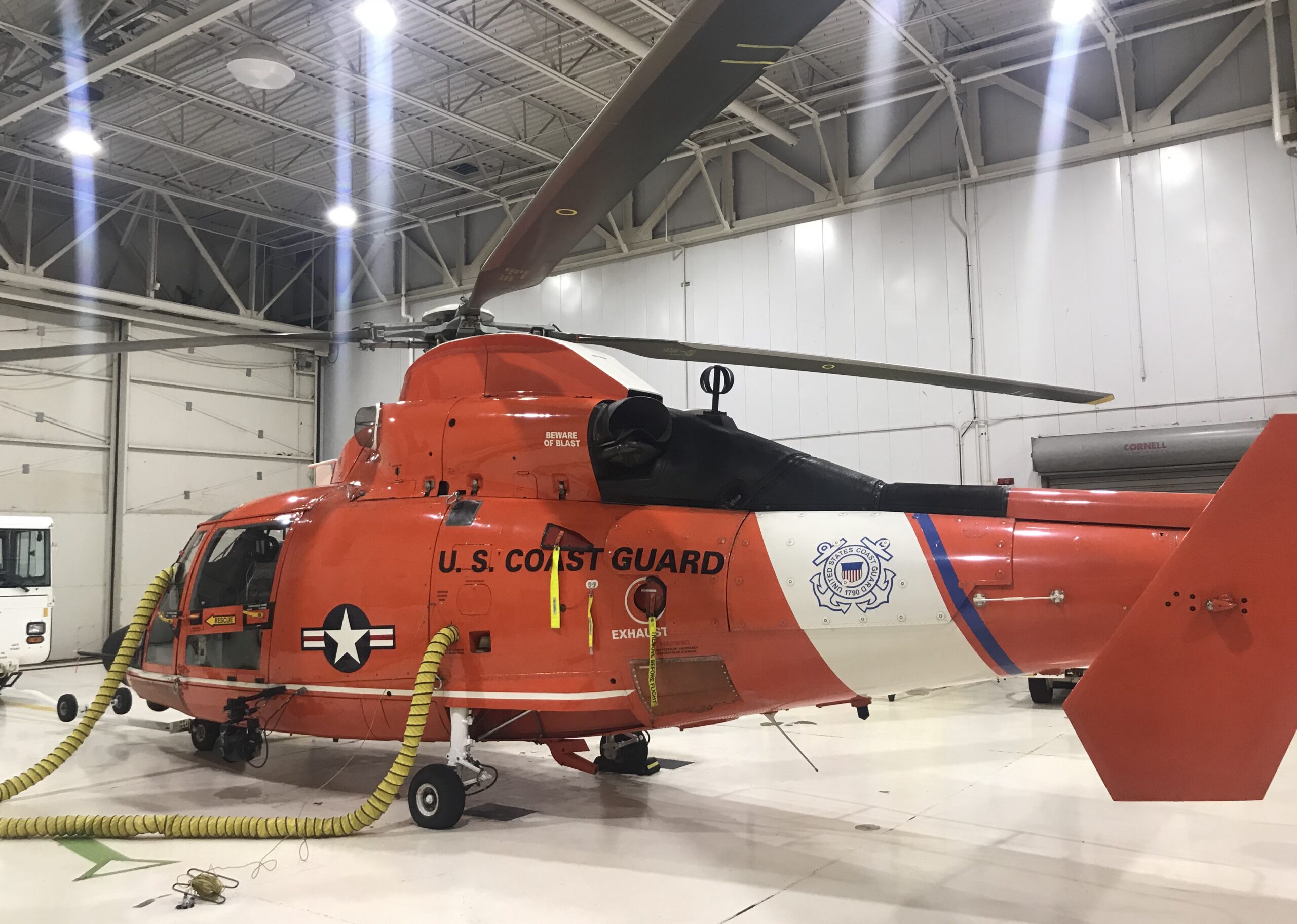
For decades, the search-and-rescue helicopter was kept at the Newport Municipal Airport before being abruptly moved in October without public input or notice.
A U.S. Coast Guard helicopter that was abruptly removed from the Newport Municipal Airport in October has been returned, according to Oregon Sens. Ron Wyden and Jeff Merkley. But despite the announcement, a lawsuit challenging the federal government’s decision to remove it continues to move forward.
Oral arguments in the lawsuit were scheduled for Dec. 8. The city of Newport, Lincoln County and the Newport Fisherman’s Wives declined to comment Friday, citing the ongoing litigation.
Following the relocation, the state of Oregon, Lincoln County and the Newport Fisherman’s Wives filed a lawsuit against the federal government, arguing the removal was illegal.
On Thursday, Merkley released a video saying he had been assured by the Coast Guard that the aircraft was back in Newport permanently.
“What this community would like to see is some sort of legal written document that the helicopter is going to be here permanently,” he said. https://www.kgw.com/article/news/local/north-coast/coast-guard-rescue-helicopter-returns-newport-lawsuit-federal-government-continues/283-d5ff962c-7c72-4109-b365-65db860a19c7

The National Marine Fisheries Service / NOAA Fisheries has declared its final decision that the populations of Chinook salmon along the Oregon Coast, as well as those in Southern Oregon and Northern California, do not qualify for listing as threatened or endangered under the Endangered Species Act (ESA).
NOAA Fisheries announced in that Oregon Coast (OC) and Southern Oregon/Northern California Coastal (SONCC) Chinook salmon don’t need Endangered Species Act (ESA) listing because they are abundant, productive, and at low extinction risk, despite concerns raised by conservation groups like the Native Fish Society and Center for Biological Diversity, citing healthy habitat and strong natural spawning numbers as key factors. Key Details of the Decision:
- Final Ruling: NOAA Fisheries concluded these specific Chinook populations don’t qualify as threatened or endangered under the ESA.
- Reasons for Finding: The populations show high overall abundance, numerous healthy spawning groups, and high productivity, allowing them to handle fishing pressure.
- Habitat: NOAA noted that habitat in many coastal streams is improving due to restoration efforts, contributing to their resilience.
- Context: This decision follows a 2022 petition from conservation groups seeking protection, with NOAA acknowledging potential concerns in an earlier review but ultimately finding low risk in its final determination.
This 12-month assessment concludes that the entire Evolutionarily Significant Unit (ESU) is “not currently in danger of extinction nor… likely to become endangered in the foreseeable future.”
This ruling effectively rejects a longstanding petition for federal protection of these particular salmon populations. Conservationists promptly criticized the finding, viewing it as a preference for economic growth over the survival of species.
“By refusing to grant protected status to Chinook salmon on the West Coast, the Trump administration has prioritized political and private interests over our declining wild spring Chinook salmon populations,” stated Jeff Miller, a senior conservation advocate at the Center for Biological Diversity, an activist group.
Miller contends that this denial will primarily benefit the logging sector and dam operators, while adversely affecting the health of rivers, Indigenous Tribes, salmon fishers, and the endangered Southern Resident orcas.
Cape Perpetua Closes 12/16
The Cape Perpetua Visitor Center will close December 16 through mid-May for a major remodel that will update aging infrastructure, refresh interpretive displays, and expand the gift shop. All other areas of the scenic site will remain open, including restrooms at the main entrance.

An information booth at the Devil’s Churn Day Use Area will operate Tuesday through Sunday from 10 to 3 with passes and maps available. According to Director Reba Ortiz, the project will create a more modern and accessible visitor experience. Some of the construction will be completed by students from the Angell Job Corps Center, with local tribes, volunteers, and partners contributing to exhibits and installations ahead of the 2026 reopening.


Winter Boater Safety Inspection Event Dec. 27th in Astoria
If you have a trailerable recreational boat registered in Oregon, consider bringing your boat down to the Clatsop County Sheriff’s Office Marine Patrol Winter Boater Safety Inspection Station event later this month. It’s happening Saturday, December 27 from 10 to 2, right across from Englund Marine at the Port of Astoria, and get your 2026 Oregon Boater Safety Inspection sticker.
You’ll need an up to date registration and some safety gear to qualify. It’s not only the law, it’s good safety stewardship for your vessel, the people you take on board, and any rescue personnel who might have to assist you in an emergency.
Per the sheriff’s office – To get your sticker, please bring the following six items:1. Current proof of registration for your boat 2. Current registration year sticker posted next to your OR numbers 3. Boater safety education course card or equivalent 4. Non-expired, good-condition fire extinguisher 5. Proper life jackets 6. A throwable cushion or ring
Depending on your vessel, you may also need a carburetor spark arrestor and a bilge fume blower.
If you have questions, give the Clatsop County Sheriff’s Marine Patrol office a call at 971-704-4465
 Coos County Sheriff’s Office Traffic Safety Reminder
As we head into the holiday season and winter weather, roads in Coos County can get slick and busy fast. Let’s all do our part to get home safely.
 Slow down – especially on Hwy 101, 42, and our coastal & mountain roads
Buckle up – every seat, every trip
Never drive impaired – alcohol, drugs, or even extreme fatigue
Watch for deer & elk – they’re active this time of year
Turn on those headlights when it’s raining or foggy – Oregon law requires it when wipers are onIf you see a stranded motorist or dangerous driving, call our non-emergency line at (541) 269-8911 or dial 911 in an emergency.We’d rather pull over for coffee than pull you out of a wreck.Drive like the people you love are in the other car.Stay safe out there, Coos County!
Make plans to attend the Holiday Lights at Shore Acres State Park in December!

Don’t have a reservation?!! Don’t worry! Take the FREE Holiday Lights Santa Shuttle from the Charleston Marina (Guano Rock Lane & Crossline Road) to Shore Acres State Park! The shuttle runs every 20 minutes, 4:15pm to 8:10pm on Friday, Saturday, and Sunday, plus Christmas Eve, Christmas Day & New Year’s Eve!
Officials along Oregon’s North Coast wrestle with how to respond to ICE operations
After six people were detained by federal immigration officers in Seaside on Oregon’s North Coast in early November, some city officials jumped to respond, looking to craft resolutions decrying what they saw as secretive and aggressive tactics.
Others held back.
A number of resolutions and statements ended up being released, finalized or passed just ahead of the Thanksgiving holiday, several weeks after the events in Seaside.

After a Seaside City Council meeting on Nov. 24, the city posted a statement on Facebook acknowledging the ICE operation from Nov. 8.
Given the disruption to local families, schools and some businesses, it was a statement some city councilors said they now felt should have gone out much sooner.
Especially because, said City Councilors Heidi Hoffman and Tita Montero, there was every indication ICE may come back again “without warning and without courtesy.”
Several days later, on Dec.1, ICE officers detained two people roughly 11 miles away at the Walmart in Warrenton. As with the operation in Seaside, local law enforcement and dispatch centers were not warned ahead of time.
The recent ICE operations have rattled officials, law enforcement and immigrant communities across Clatsop County.
For officials, there is some anxiety about how exactly to respond.
The issue is charged and some officials say they have concerns about how ICE officers are going about their jobs: wearing masks, using unmarked cars and, in some cases, having no clothing or badges that identify them as federal agents. Local police chiefs and Clatsop County Sheriff Matt Phillips worry about confusion and the potential for dangerous encounters between local and federal officers in the field.
“The problem that I have is the tactics and how things are being done,” said Warrenton Police Chief Mathew Workman. “And I get it. People have problems with our tactics too.”
But he said the federal detainments no longer seem tied to concerns about criminal behavior.
Laws around immigration are complex, but simply being in the United States without documentation is not immediately a crime under federal law. Depending on the circumstances, it may more often be a civil matter. The Trump administration has said it wants to “apprehend and remove the scores of dangerous criminal illegal immigrants.”
Workman said he empathizes with families who are afraid to leave their homes after the recent detainments because, to him, there is a real concern right now about a legitimate detainment versus a mistake.
“It’s the mistakes that scare me,” Workman said.
In Astoria, the police department recently posted a detailed public service notice about what people should do if a traffic stop doesn’t feel right and there are concerns about whether the officer contacting them is legitimate, or if they are witnessing a suspicious stop. The post also provided information about filing complaints about potential civil rights violations.
In Seaside, Police Chief Dave Ham told city councilors he didn’t feel the need to put out similar information, though he, like other local police chiefs, wished ICE would alert them in advance that they are coming to the area.
Oregon is a sanctuary state. State law dictates that local resources can’t be used for immigration enforcement. State and local governments and their agencies cannot participate in any way in immigration enforcement without a judicial warrant. At the same time, local police can’t interfere with federal immigration enforcement.
In Warrenton, after the detainments on Dec.1, Workman said he still has little information about the operation. There was an early rumor that ICE officers had smashed people’s car windows and dragged them out. This proved to be false.
Workman first heard about what was happening that day from Astoria Police Chief Stacy Kelly.
“Once we started hearing about it, we went out there, but everything’s done and gone,” he said.
Other federal agencies conduct investigations and operations in and around Warrenton.THANKS TO OUR SPONSOR:Become a Sponsor
“We used to get calls all the time, not just from (ICE), from all federal agencies: ‘Hey, we’re conducting surveillance, this is the vehicle we’re in,’” Workman said. “And we still get that from the other federal agencies.”
Later that night on Dec.1, the Astoria City Council read a resolution directed at the events in Seaside on Nov.8 and condemning the more aggressive and secretive tactics ICE has employed when carrying out immigration enforcement under the Trump administration. The resolution was modeled off of one the city of Cannon Beach, south of Seaside, passed ahead of Thanksgiving.
The Astoria City Council had previously published a statement of support, saying, “Please know that when one part of our community is under duress, we are all under duress. An erosion of civil rights for some is an erosion of civil rights for all. We stand with our Latinx community.”
In Seaside, city councilors were split on what kind of message they wanted to craft. Some felt most comfortable with only pointing people towards information about state law and explaining what local police can and can’t do when federal immigration agents are in town.
Others, like Montero, Hoffman and City Councilor Seamus McVey wanted to include an additional statement, something more forceful and possibly — in their colleagues’ view — more opinionated.
The decision to say anything at all followed a meeting days after the arrests. City councilors heard from several community members then who were upset and outraged by what had occurred.
One woman said she came to Seaside, undocumented, as a child and has been working and paying state and federal taxes here since she was a teenager.
“Sadly, our government has not found a suitable way for me to have a pathway to citizenship,” she said. “I hope you can imagine the fear that runs through this community when we hear ICE agents are here in town, snatching away good, honest and hard-working family and friends.”
She asked: Does the city have plans to protect the community, specifically the Hispanic community in Seaside?
“The City of Seaside recognizes events like this can create uncertainty for many in our community,” the city’s Facebook post ultimately stated. It directed people to a resource page on the city’s website.
“Our goal is to ensure that every resident has access to accurate, reliable information about how immigration enforcement works in Oregon,” the post concluded, “and what to expect from your local police.”
Resolutions like those passed by Cannon Beach and now Astoria are important public statements, even essential, said Jenny Pool Radway, executive director of Consejo Hispano, an Astoria-based nonprofit that works with Latine communities across Clatsop County.
She called the detentions “unlawful abductions.”
Statements by officials “help counter the fear and uncertainty created by ICE activity and affirm that our families belong here,” she said in a statement to KMUN. “But this isn’t just about Latine residents. We may be the first target, but community members know it won’t stop with us.”
“When city leaders speak up, they are protecting the values of dignity and fairness for the entire community,” she said.
In Astoria, City Councilor Andrea Mazzarella, backed by others on that City Council, is pushing for more tangible action beyond the resolution passed Dec. 1. In light of ongoing concerns about a possible ICE detention center in Newport on Oregon’s Central Coast, she has asked that they consider possible land restrictions to prevent a similar situation on the North Coast.
After the ICE detainments on Nov. 8, a local chapter of the progressive organization Indivisible held a community meeting in Astoria.
The goal was to educate people on their rights and to train them how to safely and effectively be bystanders and witnesses during Immigration and Customs Enforcement operations. Usually, 30 to 50 people attend these meetings. Organizers thought that might tip into 100 because of recent events.
“But it was way more than we expected,” said Julia Hesse, coordinator for Indivisible North Coast Oregon.
The room at Grace Episcopal Church was packed tight. Organizers counted between 140 to 170 people.
“A lot of people are scared,” Hesse said. “They want to know what they can do. They want to help the Latinx community that’s affected by this.”
She expects future training events will also be well attended now that ICE operations have become a reality in Clatsop County. (SOURCE)
Oregon Parks and Recreation Department (OPRD) celebrates the completion of three GO Bond projects this year: Beverly Beach and Nehalem Bay upgraded vital infrastructure, and Fort Stevens restored the exterior of the historic Guard House.
The work is part of the one-time general obligation bonds (GO Bonds) approved by the legislature in 2021 for Oregon State Parks.
The goal of the $50 million GO Bond projects was to help update aging infrastructure and add capacity at several state parks.
Silver Falls also completed a portion of its GO Bond project last year with the North Canyon trailhead and parking lot, which eased parking congestion and added a new accessible trail.
Fort Stevens will complete its campground utility upgrades as part of GO Bonds in May 2026. Two more projects, safety upgrades at Cape Lookout and visitor center updates at Silver Falls, will break ground in 2026.
The remaining GO Bond projects at Kam Wah Chung, Smith Rock, Champoeg and the campground expansion at Silver Falls will be placed on hold until additional funding is available. OPRD will allocate the approximately $15 million in remaining GO Bonds to higher priority backlog maintenance projects including existing utility systems, infrastructure and facilities.
“When projects were initially identified 2021, we could not have anticipated the substantial increases in costs of materials, staffing and consultants or the significant reduction in revenue,” said Deputy Director for Field and Community Services Matt Rippee.
“None of these were easy decisions, but at this time it is vital we focus on projects that will extend the life of existing facilities rather than expanding. Without this change, we would not be able to complete maintenance needs essential to protect and preserve our state parks.”
OPRD is projecting a $14 million operations budget shortfall this biennium due to a projected decrease in Lottery revenue, increasing costs and a long-standing need for more sustainable funding. Staff are reviewing all OPRD’s costs to help build a more sustainable funding future.
Florence is getting ready to usher in the holiday season with a full month of celebrations designed to bring families together, energize local businesses, and showcase the community spirit that defines this coastal town.
The Florence Area Chamber of Commerce has unveiled an extensive lineup of events that will span from Thanksgiving weekend through Christmas Eve, offering residents and visitors a festive invitation to shop, explore, and enjoy the charm of the season.

The excitement begins with Shop Local Saturday on November 29, a popular kickoff that encourages holiday shoppers to support the businesses that anchor Florence’s economic and cultural identity. The first one hundred shoppers will be greeted with complimentary tote bags filled with discounts, treats for kids, walking maps, and updated sales information. The Chamber Welcome Tent will be set up at Gazebo Park on Bay Street between one and three in the afternoon, providing resources, directories, and materials for families preparing to participate in the holidays’ signature activities. Children can also pick up stickers, coloring sheets, and the official map for the community treasure hunt.
That treasure hunt, known as the Sami and Ollie Treasure Hunt, runs from November 28 through December 24 and invites families to explore Florence’s local merchants in search of hidden holiday surprises. Sponsored by Sea Lion Caves, the hunt is designed to bring visitors into shops throughout town, strengthening community-business connections while adding a layer of festive fun to the holiday shopping experience. Treasure maps are available at participating merchants and at the Florence Visitor Center on Highway 101.
Festivities continue on December 6 with Santa’s Workshop at Cross Road Church on 10th Street, a family event that blends crafts, cocoa, cookies, and a chance for children to write letters to Santa. Santa himself will make an appearance between noon and one, offering a personal holiday moment for families. Presented by local sponsors Lofy Construction, Coastal Home Services, and Beach Bum Doggie Resort, the workshop provides a warm and welcoming mid-day gathering for children eager to celebrate the season.
Later that afternoon, downtown Florence transforms into Santa’s Coastal Playground, the highlight of the city’s holiday festivities. Bay Street will come alive with music, lights, giveaways, hayrides, and community performances. Families will see lighted balloons, take part in a walk and bike parade, enjoy a performance by the Florence Community Choir, and welcome the arrival of Santa and Mrs. Claus. The day culminates with the city’s annual tree-lighting ceremony, bringing residents together as the tree is illuminated in the heart of the historic district. The Florence Public Works Department will provide hayrides, adding to the nostalgic charm of the celebration.
The Chamber emphasizes that shopping locally during this season is not only a festive activity but an essential way to support Florence’s economic health. Local businesses prepare for these events year-round, and the month-long celebration is designed to drive both foot traffic and community engagement. Many merchants will offer extended hours and holiday discounts throughout December, ensuring that residents and visitors have ample opportunity to enjoy everything Florence has to offer.
More details, updates, and participating business information can be found at FlorenceFun.com or by contacting the Florence Area Chamber of Commerce.

The Oregon State Marine Board is sending out motorboat registration renewal notices for registrations expiring December 31, 2025.
Boaters with an email on file will receive digital notices with instructions to renew through the Boat Oregon Store — the fastest option, offering a printable temporary permit for immediate use. Those without email will receive notices by U.S. Mail by mid-November. Decals typically arrive within a few days for online renewals and longer by mail. The Marine Board recommends renewing this fall or early winter to avoid delays next summer. Motorized boats and sailboats 12 feet or longer must be titled and registered. The Boat Oregon Store also offers waterway access permits for kayaks, canoes, paddleboards, and other non-motorized craft.
The Florence Area Chamber of Commerce is seeking input from local businesses on how recent demonstrations may have affected day-to-day operations.
Chamber officials say the goal is to accurately represent the community’s experience and provide informed feedback to local leaders and decision-makers.
Businesses are encouraged to complete a short, confidential survey, whether or not they’re Chamber members. Responses will help guide efforts to maintain a safe and thriving business environment in Florence. A link to the survey is available through the Florence Area Chamber of Commerce.
Donor Offers $50K Reward in 40-Year-Old Case of Missing Oregon Coast Teen

Lincoln County authorities hope the recent offer from an anonymous donor of a $50,000 reward will lead to the remains of a 17-year-old Siletz girl who was last seen walking on U.S. 20 more than four decades ago.
An anonymous donor put up money hoping it will spur information that leads not only to Kelly Disney’s remains but also to the conviction of her killer, according to the Lincoln County District Attorney’s Office.
The DA’s Office has confirmed that an anonymous donor offered the reward for any information leading to Disney’s remains and/or the conviction of her killer.
Information can be submitted anonymously at 541-265-0669 or online at FindKellyDisney@co.lincoln.or.us
READ MORE on CASE: https://lincolnchronicle.org/15597-2/
Florence Farmers Market Seeking Board Members
The Florence Farmers Market is looking for new members to serve on its Board of Directors and committees. Organizers say it’s just two to four hours a month, with board members meeting monthly and helping with areas like vendors, outreach, finances, or volunteers. No experience is required, only a passion for local food and community. The nonprofit market operates weekly on the Port of Siuslaw Boardwalk, providing fresh food and local products to Florence and surrounding areas. More information is available at florencefarmersmarket.org
Wildlife Center of the North Coast · We need your help!
Make a difference in wildlife rescue! Join our Wild at Heart Membership Program starting at just $5/month. Help us save lives!  https://coastwildlife.org/wild-at-heart/
It’s been a busy summer here at the Wildlife Center of the North Coast, and our rehab clinic has gone through lots of supplies caring for patients!!

->> To help us restock and stay prepared for the next wave of wildlife in need, we’ve updated our Amazon Wishlist with the items we need most. https://www.amazon.com/hz/wishlist/ls/LU97SQA0VPZA
Every donation—big or small—goes directly to helping orphaned, injured, and sick wildlife get a second chance at life. Check out our wishlist here: https://www.amazon.com/hz/wishlist/ls/LU97SQA0VPZA Thank you for being part of our wildlife rescue family!
Friends of Haystack Rock · We have puffins!

Check out our website, Friendsofhaystackrock.org to see them live! We have our webcam zoomed in on a couple active burrows. Your best chance to see them is in the morning between 8 a.m. and 11 a.m.
Volunteers are being sought to help prepare and serve lunch three times a week at the Florence Senior and Activity Center.
They serve lunch Monday, Wednesday, and Friday each week. Both programs, the in-house dining known as Cafe 60, and Meals on Wheels, are very important in helping promote socialization and nutrition for older adults in Lane County. Volunteer drivers for Meals on Wheels use their own vehicles, but they can be reimbursed for their mileage. The Lane Council of Governments operates the Senior and Disabled Services in Lane County. Alisa Andrion encourages potential volunteers to give her a call at L-COG, 541-682-1366.
Coos Bay Police Department – WE’RE HIRING 9-1-1 DISPATCHERS
$4684 – $5972/Month DOQ — We offer:•A dynamic team environment •Alternative schedule benefiting work/life balance •Up to 5 weeks paid time off per year after the first year •The opportunity to serve your community
Our team members have come from a variety of work fields- no experience necessary! For additional information from the North Coos 9-1-1 Recruitment Team or to schedule a ride-along please email: join911@coosbayor.govhttps://www.coosbayor.gov/…/Compon…/JobPosts/Job/126/107
Gleneden Beach Community Club Events
Look what’s coming up soon at the Club… (sign up at glenedenbeach.org)
Emergency Volunteer Corps of Nehalem Bay
Follow on Facebook: Emergency Volunteer Corps of Nehalem Bay
Oregon Food Bank · Find free food sites near you using OregonFoodFinder.org.
If you can’t make it to a food location, someone else can pick up food for you.You will just need to print and fill out the Authorized Representative form at https://lnkd.in/dsskUpkQ, and have them take it with them to the food sites. You can find step-by-step instructions at https://lnkd.in/dVBRxn-A.
Worried about recent changes or losing assistance?
Here are resources that can help:
211Info: Dial 2-1-1 or visit the211Info food webpagefor information and referrals to more than 1,500 food resources across Oregon.
Oregon Food Bank: Use the Oregon Food Bank’s Food Finder Mapto find over 100 food pantries, free food markets or hot meal programs near you.
Aging and Disability Resource Connection of Oregon (ADRC): Call 855-673-2372 or visit theADRC food webpage to find local meal programs and food boxes in your area.


The United States Postal Service official mailing deadlines for the 2025 holiday season
For those sending items within the contiguous 48 states, the following send-by dates are recommended:
December 17 for USPS Ground Advantage and First-Class Mail (which includes holiday cards and small packages)
December 18 for Priority Mail
December 20 for Priority Mail Express, the quickest domestic shipping option offered by USPS.
USPS advises customers to ship early, use trackable services, and consider acquiring insurance for valuable items. Flat-rate boxes and shipping supplies can be obtained at local post offices and online at usps.com, where a comprehensive list of holiday deadlines, including those for international and military shipping, is also available.
Diane Downs Denied Parole Again
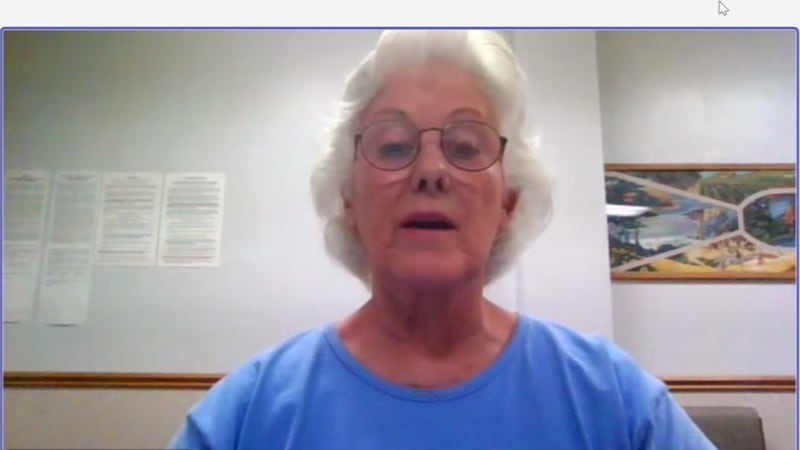
Diane Downs has been denied parole by the Oregon Board of Parole, and she will not be eligible to petition for another parole hearing until 2031.

Key Details
- Parole Hearing: Downs, 70, participated in a virtual hearing in October 2025.
- Decision Date: The parole board announced its decision to deny parole in December 2025.
- Reason for Denial: Downs continues to maintain her innocence, claiming a “shaggy-haired stranger” shot her and her children, a story the jury rejected during her 1984 trial. She told the board, “I’m innocent of shooting but I am guilty of putting my kids in danger,” a statement that indicates a continued failure to accept full responsibility for her crimes. Downs has been diagnosed with a personality disorder with narcissistic traits and is considered a threat to society.
- Next Hearing: Due to the denial and lack of remorse, the board ruled that her next hearing can be scheduled in 2031, which is the maximum of 10 years allowed under a specific Oregon law for offenders like her.
- Incarceration Status: Downs is serving a sentence of life in prison plus 50 years. She is currently incarcerated in a women’s prison in California.
BackgroundDowns was convicted in 1984 for the murder of her 7-year-old daughter, Cheryl, and the attempted murder of her two other children, Christie and Danny, near Springfield, Oregon, in May 1983.
The case gained national notoriety and was the subject of the best-selling true-crime book Small Sacrifices by Ann Rule. This was her fourth parole hearing, having been previously denied in 2008, 2010, and 2020.
Oregon Department of Forestry and University of Oregon Hazards Lab sign memorandum of understanding to strengthen statewide wildfire hazard monitoring and preparedness
The Oregon Department of Forestry (ODF) and the Oregon Hazards Lab at the University of Oregon (OHAZ) have entered a new Memorandum of Understanding (MOU) that formally establishes a statewide collaboration to improve early detection, monitoring, and response to natural hazards across Oregon.
The agreement aligns operations, research, and practices between the two organizations, supporting shared goals of reducing risk, protecting communities, and building a more resilient future for the state. The agreement also represents a direct outcome of the Oregon Wildfire Detection Camera Interoperability Committee that serves Oregon by coordinating a broad consortium of fire agencies, first responders, utility companies, and technology operators.
Under the MOU, ODF and OHAZ will coordinate efforts on legislative strategy and funding pursuits, expand access to emerging tools and scientific expertise, and develop collaborative pilot projects. The partnership emphasizes interoperability, training, exchange of data and best practices.
“This collaboration advances Oregon’s ability to respond to wildfire, seismic threats, floods, and other natural hazards with the best tools and information available,” said Leland O’Driscoll, the Director of OHAZ. “By partnering with ODF, we can strengthen statewide systems that protect lives, property, and natural resources.”
The partnership reflects a broader vision: that clear, coordinated arrangements among Oregon’s public agencies and research institutions enhance transparency, accountability, and reliability during critical events. By integrating scientific innovation with on-the-ground operational expertise, ODF and OHAZ aim to improve hazard monitoring and early detection statewide.
“Oregonians benefit when universities, government agencies, and public partners work from a shared understanding and aligned goals,” said Michael Curran, ODF Fire Protection Division Chief. “This agreement enables meaningful collaboration—from research to real-time operations—to help communities prepare for and respond to hazards more effectively.”
As Oregon continues to face increasing risks from wildfire, extreme weather, and geological hazards, this collaboration will help advance proactive strategies and better equip the state with timely, actionable information.
Oregon Department of Emergency Management Launches New OEM Grants Platform to Streamline Disaster Recovery Funding
The Oregon Department of Emergency Management (OEM) is launching the OEM Grants platform on December 16, 2025. This new, statewide system is designed to simplify how organizations approved for grants manage and track Federal Emergency Management Agency (FEMA) Public Assistance (PA) funding after disasters. The platform will improve efficiency, transparency and accountability in Oregon’s long-term recovery efforts.
Under the new process, subapplicants will continue to use FEMA’s Public Assistance Grants Portal (GP) to apply for funding, upload required documentation for project development, and work through eligibility and requirements with FEMA. Once FEMA approves a project, management will transition to the OEM Grants platform.
Within the new system, grant recipients will be able to:
- Manage projects from grant award through closeout
- Submit and track reimbursement requests
- Track and report grant finances
- Communicate and collaborate directly with OEM staff
“Oregon communities depend on timely and transparent access to disaster recovery funding, and this new platform helps ensure we can meet that responsibility,” Erin McMahon, Director of the Oregon Department of Emergency Management, said. “By modernizing how we manage Public Assistance grants, we are strengthening our partnerships with certain nonprofits, as well as local and Tribal governments. We are also improving how we support communities throughout their recovery.”
Washington and Oregon left waiting for new cost estimate to replace I-5 bridge
Planners say they need the Coast Guard to green light a design, a decision expected in the spring. Construction isn’t getting any cheaper.

A group of Washington and Oregon lawmakers gathered Monday, expecting to hear a new estimate of the cost to replace the Interstate 5 bridge across the Columbia River.
When it didn’t come, some on the bi-state and bipartisan committee assigned to keep tabs on the megaproject rebuked planners responsible for delivering the updated figures. Lawmakers are wrestling with budget challenges in both states, they said, and escalating costs might need addressing in their respective 2026 sessions.
“I want a date, and I want a report, or else I would say that your team is not doing its work,” said Oregon state Rep. Thủy Trần, D-Portland. “You can’t punt it down the road without giving us something.”
Washington state Rep. John Ley, R-Vancouver, said he was “extremely disappointed” because if costs are rising, the two states may be asked to give additional money. Lawmakers need time to explore ways to trim the project to something “closer to our taxpayers ability to pay,” he said.
Project planners acknowledged they didn’t deliver. They said they are waiting to learn if the U.S. Coast Guard will allow the design of the new bridge to be the fixed span desired by the two states or require a movable span like the existing bridge.
A movable span will add more than a half-billion dollars to the project’s price tag.
That decision is critical to an “accurate and comprehensive cost estimate,” said Carley Francis, southwest regional administrator for the Washington State Department of Transportation and the incoming interim director of the Interstate Bridge Replacement Program.
There’s no sign the trend will reverse. It’s why lawmakers in September said they anticipated the next cost estimate will exceed $8 billion and could reach $10 billion.
While Francis detailed the process for calculating an estimate, she veered away from positing any numbers Monday. She made clear multiple times it won’t be done until they know what kind of bridge it will be.
“I do not have a specific time frame for you today because the Coast Guard decision is so material,” she said.
‘Tremendously tough project’ – 2026 is shaping as a year of critical decisions for the project.
First up, is the U.S. Coast Guard’s determination.
Three years ago, the federal entity embraced a movable span but gave the two states time to put forth an argument for a fixed span. Last month, project planners submitted a report responding to the Coast Guard’s arguments that included agreements to offset impacts to those businesses that cannot travel under a fixed span.
Also early next year, the Federal Highway Administration and Federal Transit Administration are expected to publish the final supplemental environmental impact statement for the project. But it cannot be finished until the bridge configuration is known.
Once the bridge design is set, staff said they can update the cost estimate and complete a separate plan showing how the multi-year undertaking will be financed.
That financial plan is due to the federal government by the end of next September and is needed to unlock a $1.5 billion capital investment grant secured last year. Missing the deadline puts those dollars at risk, although program staff said they’d seek an extension if they are waiting on a bridge design decision and environmental report.
If required approvals are in hand in 2026, as planners anticipate, cars could begin driving across a new bridge in 2032 or 2033.
It’s a “tremendously tough project,” said outgoing program administrator Greg Johnson.
“The biggest hedge we have against escalation and inflation is getting started, getting shovels in the ground,” he added.
Questions abound – Lawmakers weren’t alone in their pique at the lack of new projected price tag.
“Tragically today you have failed to get the most important information about this project: How much it will cost,” said Joe Cortright, director of City Observatory in Portland, a think tank focusing on urban economic issues. “They really know the cost estimate will be much higher but they are not sharing it with you.”
Chris Smith of Just Crossing Alliance, which advocates for light rail and transit on the future bridge, said the delay in producing numbers is part of a “nakedly political process to avoid delivering bad news.”
Laurie Layne of Buckley, a small town in Washington’s Pierce County, urged lawmakers to remember that many residents of the two states cannot afford to pay more.
“A lot of us taxpayers are on hamburger helper budgets,” she said.
Cost estimate and bridge design were not the only outstanding matters flagged Monday.
Oregon Rep. Shelly Boshart Davis, R-Albany, said it’s problematic that administrators know how bicyclists and pedestrians will be served but haven’t decided on how many auxiliary lanes there will be on the bridge, calling it a top concern for the freight industry.
Johnson said a decision on whether the bridge will include one or two auxiliary lanes in each direction will be made next year in the final supplemental environmental impact statement. (SOURCE)
Opponents of Oregon’s newly established transportation funding package submitted nearly 200,000 signatures to the Secretary of State’s Office on Friday, an action that immediately halts the forthcoming tax and fee increases pending verification of the signatures.
The initiative, spearheaded by the “No Tax Oregon” campaign, seeks to place a repeal referendum on the ballot for November 2026 after watching Gov. Tina Kotek keep piling on new taxes to Oregonians. Petitioners require just over 78,000 valid signatures to qualify.
The organization claims it exceeded that requirement within days and has continued to gather signatures statewide. The transportation package, which was approved by lawmakers earlier this year, encompasses a six-cent increase in the gas tax, elevated DMV fees even more, and a doubling of the state’s transit payroll tax.
Proponents assert that the revenue is essential for maintaining roads and sustaining transit services. Opponents argue that the additional costs—estimated to be around $600 annually for some families—would exacerbate affordability challenges throughout the state, and they assert that the pause prevents ODOT from generating new revenue until voters have the opportunity to express their opinions.
Oregon ranks fourth in GoFundMe’s 2025 year of help report
New data from GoFundMe’s 2025 Year in Help report highlights Oregon as the fourth most generous state in the country, reflecting a year in which people across the state stepped up for their neighbors in moments of crisis.

“I wanna believe that this is really a function of how human beings at their best are meant to interact,” said Margaret Richardson, GoFundMe’s chief corporate affairs and marketing officer.
The report points to a wave of support shared among Oregonians throughout the year. Richardson said stories of need circulating across communities played a key role in inspiring people to give.
“The stories that are breaking through and reaching Oregonians are inspiring them to unlock their generosity,” she said. “That storytelling that happens with human dignity really powers people to feel like ‘I can do something about this.’”
One of the strongest data points in the report was the number of donations directed to the 2025 Wildfire Relief Fund. More than 1,000 Oregonians contributed, a result Richardson said is tied to the shared experience many residents have with wildfire threats.
“Many Oregonians themselves have faced the imminent challenge of being displaced or being evacuated or staying inside because of wildfires,” she said. “That empathy of having been through it contributes to the extraordinary generosity that we see.”
GoFundMe’s report notes that moments of hardship helped bring communities together, with Oregonians repeatedly responding to ensure their neighbors did not face those challenges alone. SEE MORE: https://www.gofundme.com/c/gofundme-2025-year-in-help
Oregon reduces barriers to birth control for Medicaid members
Oregon Health Plan members will be able to obtain birth control and emergency contraception without a prescription and at no cost starting Dec. 16
Starting Tuesday, Oregon Health Plan (OHP / Medicaid) members will be able to get over-the-counter birth control pills, including Opill, and emergency contraception at no cost at pharmacies in the state. Oregon Health Authority (OHA), in collaboration with the Oregon Board of Pharmacy, made this possible through a standing order, which allows pharmacists to provide these medications to OHP members and bill OHP.
“Access to reproductive health care should not depend on how much money you make or what kind of insurance you have,” Governor Tina Kotek said. “This step ensures that Oregon Health Plan families can get timely, affordable birth control. I will keep working to make sure every Oregonian can access the care they need to make the decisions that are right for them.”
In Oregon, these medications are already covered without a prescription for people with private insurance. Federal law, however, requires that all medications for Medicaid enrollees be prescribed by a licensed practitioner who is enrolled in the state’s Medicaid program. Oregon’s new standing order means that OHP members will no longer have to get a prescription to access these contraceptives at no cost.
“This change removes a real and unnecessary barrier to care,” said OHA Director, Dr. Sejal Hathi. “By allowing Oregon Health Plan members to get safe, effective contraception directly from pharmacies – without a prescription and at no cost to themselves – we are closing a longstanding gap between private insurance and Medicaid and ensuring all people in Oregon have greater control over their own reproductive health.”
Over-the-counter emergency contraception has been widely available for several years, and the FDA approved Opill as the first birth control pill for over-the-counter use in 2023. Previously, however, OHP members were required to pay out of pocket or else seek out a doctor’s appointment for a prescription to get these medicines covered.
Oregon’s Reproductive Health Equity Act (RHEA) requires that many health plans offered in Oregon, including all plans offered through the Marketplace, cover over-the-counter contraceptives at no cost. Some private insurance plans that are not subject to Oregon insurance laws may not include this coverage, so people with private insurance should contact their insurance company for more information about their coverage. Additional information can be found on the Department of Consumer and Business Services (DCBS) web page.
How OHP members can get access:
- OHP members can go to their approved pharmacy and request emergency contraception or Opill, and for it to be covered by OHP.
- Most OHP members get their benefits through a local Coordinated Care Organization (CCO); OHP members can call their CCO and ask which pharmacy to go to.
- OHP members not in a CCO (known as OHP Open Card), or who do not know which CCO they’re in, can call OHP Client Services for help at 800-273-0557.
- OHP members will need to provide their OHP ID number, which is on their OHP ID card or CCO ID card, or by providing personal information that enables the pharmacy staff to search for and confirm enrollment in OHP.
Additional information is available on the OHP member webpage.
Oregon Department of Human Services – New federal work rules for SNAP food benefits are now in place statewide in Oregon
The new rules specifically are for people who have Able-Bodied Adult Without Dependents (ABAWD) status. Here’s what’s changed:
– Oregon had previously waived ABAWD work requirements in 30 of 36 counties and all Tribal lands because of limited job opportunities. These waivers were scheduled to last until Dec. 31, 2025. The USDA ended them earlier.
– A recent federal law passed in July 2025 also changed who must follow ABAWD work rules. These rules now apply to adults ages 18–64 who do not have children under age 14 in their SNAP household. This is a change from the previous rules, which applied only to adults up to age 54 and households without children under age 18.
– In addition, the new federal law makes it so that some groups who were previously exempt now must meet work rules. This includes veterans, people who were in foster care, and people experiencing homelessness.
We have sent out notices to people who may be impacted. Contact us right away at 1-833-947-1694 or SNAP.ABAWDTeam@odhsoha.oregon.gov if you have questions about these new rules or if you think they may apply to you and need help.
You can read more in this news release: https://apps.oregon.gov/…/snap-food-benefit-work-rules…
Oregon Health Authority urges caution to prevent carbon monoxide poisoning during winter months
- What you should know:
- Carbon monoxide risks increase during winter due to tighter home ventilation and heavier use of heating appliances.
- Carbon monoxide exposure can cause headaches, dizziness, nausea, confusion and loss of consciousness, and it can be fatal.
- Have wood stoves, chimneys and vents regularly inspected and cleaned, ensure wood-burning devices are properly vented, and never use outdoor heating or cooking devices inside homes.
PORTLAND, Ore – As temperatures drop and Oregon households rely more on wood stoves, space heaters and other heating sources, Oregon Health Authority is reminding people around the state to take steps to prevent carbon monoxide poisoning.
Carbon monoxide is a colorless, odorless gas produced whenever fuel is burned. In winter, carbon monoxide risks increase due to tighter home ventilation and heavier use of heating appliances. Exposure can cause headaches, dizziness, nausea, confusion, loss of consciousness and can be fatal without prompt treatment.
“Carbon monoxide tragedies are preventable,” said David Farrer, Ph.D., toxicologist in the OHA Public Health Division’s Environmental Public Health Section. “Proper maintenance, ventilation and working carbon monoxide alarms are essential for keeping families safe during the winter.”
In Oregon last year, there were 121 emergency and urgent care visits from carbon monoxide poisoning. Since Oct. 1 this year, there have been 55 carbon monoxide poisoning emergency and urgent care visits.
Wood stoves and heating safety
Improperly installed, poorly maintained, or inadequately vented wood stoves are a leading cause of winter carbon monoxide incidents. OHA urges residents to:
- Have wood stoves, chimneys and vents inspected and cleaned annually by certified professionals.
- Ensure all wood-burning devices are properly vented to the outside.
- Never use outdoor heating or cooking devices, such as camp stoves, charcoal grills or generators – inside homes, garages or enclosed spaces.
Additional safety tips
- Install battery-powered or battery-backed-up carbon monoxide alarms on every level of the home.
- Test alarms monthly and replace batteries twice a year.
- Never run vehicles, generators or gas-powered tools in enclosed or partially enclosed spaces.
- Seek fresh air immediately and call 911 if a carbon monoxide alarm sounds or if symptoms occur.
For video of woodstoves in use and battery-backed -up carbon monoxide alarms, click here.
For more information on carbon monoxide prevention and winter safety, visit OHA’s website at https://www.oregon.gov/oha/ph/preparedness/currenthazards/pages/carbonmonoxidepoisoning.aspx.
BLM Launches “One Dollar, One Tree” Holiday Savings Across Local Public Lands
New fee reductions and expanded cutting areas offer meaningful savings for families this winter
The Bureau of Land Management has announced a series of holiday affordability measures that will help families save money, enjoy public lands, and support wildfire prevention efforts across Oregon and Washington during the 2025–2026 winter season.
Effective immediately through January 31, the BLM is reducing many personal-use permit fees to just $1, including Christmas tree permits and firewood permits. Local BLM offices are also opening new cutting areas in overstocked woodlands to provide families with more opportunities to gather their own firewood and Christmas trees, while also supporting forest thinning and hazardous fuel reduction.
“Here in Oregon and Washington, families rely on public lands for tradition, recreation, and essential resources,” said Barry Bushue, BLM OR/WA State Director. “These fee reductions and expanded access make it easier for people to gather firewood and Christmas trees close to home, all while helping us reduce hazardous fuels and improve forest health.”
These actions align with the Trump administration’s mission to lower costs for American families and will contribute to national savings estimated at more than $9.4 million this holiday season.
Effective immediately, the BLM will:
- Reduce fees for personal-use Christmas tree and firewood permits.
- Increase household limits to up to 10 cords of firewood and up to three Christmas trees, with flexibility to adjust limits in areas with abundant resources.
These steps will help reduce household costs, expand access to local woodlands, and improve forest conditions by removing overstocked or hazardous fuels. The BLM will continue coordinating with community partners, tribal governments and local organizations to share information about permit availability and new cutting areas.
Residents can find up-to-date information on permit locations, cutting area maps, and safety guidance at: https://www.blm.gov/programs/natural-resources/forests-and-woodlands/forest-product-permits/oregon-christmas-trees
-BLM- The BLM manages roughly 245 million acres of public land located primarily in 12 western states, including Alaska, on behalf of the American people. The BLM also administers 700 million acres of sub-surface mineral estate throughout the nation. Our mission is to sustain the health, diversity, and productivity of America’s public lands for the use and enjoyment of present and future generations.
Forest Trust Land Advisory Committee to hold special meeting Dec. 19
SALEM, Ore. — The Forest Trust Land Advisory Committee will hold a special virtual meeting to discuss the proposed draft Forest Management Plan for state forests on Friday, Dec. 19, from 10 a.m. to noon. There is no in-person option for this meeting.
To join, use the Zoom video conference information found on the agenda.
Agenda items will include:
- A public comment period.
- Review of the proposed draft Forest Management Plan for state forests.
Public comment is scheduled at the beginning of the meeting. To submit written comment, email ftlac.comment@odf.oregon.gov. Written comments sent at least 48 hours before the meeting will give the FTLAC time to review and consider information. Comments submitted after that window of time will be sent to the FTLAC after the meeting, entered into the record and posted online. Comments are not accepted after the meeting concludes.
The Forest Trust Land Advisory Committee is comprised of seven county commissioners representing 15 Oregon counties where state forestlands are located. The FTLAC is a statutorily established committee that advises the Board of Forestry on matters related to forestland managed by ODF. View more information on the FTLAC webpage.
Accommodations for people with disabilities, and special materials, services, or assistance can be arranged by calling at least 48 hours in advance of the meeting at 503-945-7200 or by email at ftlac.comment@odf.oregon.gov.
BLM approves lithium exploration in southeast Oregon
VALE, Ore.— The Bureau of Land Management recently approved the expansion of lithium exploration activities in southern Malheur County, about 20 miles west of McDermitt, Nev.
With this approval, HiTech Minerals, Inc. is authorized to conduct lithium mineral exploration activities over the course of five years. Lithium has been on the Department of the Interior’s list of critical minerals since the list was established in 2017.
“The HiTech lithium exploration project represents a significant step toward achieving the nation’s energy goals and reducing dependence on foreign critical minerals—key priorities under the President’s agenda,” said BLM Acting Malheur Field Manager Tara McLain.
The project includes disturbance of up to 73 total acres created by 168 exploration drill sites across 7,200 acres of public lands, the construction of 22 miles of new access routes, and other temporary disturbances to store necessary equipment.
Exploration drilling would occur annually between July 1 and November 30 for up to five years, and concurrent reclamation of the disturbances would occur after each drill season. Subsurface hydrological, geophysical, and geochemical data may be collected during the proposed drilling activities as well.
OHA urges vaccinations as flu activity rises, holidays approach
– As influenza activity increases over the next two months before its expected peak in early spring, health officials urge everyone to get their flu vaccine, particularly as people gather indoors to celebrate the holidays.
So far, hospitalizations remain low. But the percentage of positive flu tests is on the rise.
“The flu season generally continues into the spring, which means flu activity will continue to increase for many months,” said Howard Chiou, M.D., Ph.D., medical director for communicable diseases and immunizations at Oregon Health Authority’s Public Health Division. “That’s why it’s never too late to get the flu vaccine.”
Chiou added that getting vaccinated now is especially important. “People will leave Thanksgiving, not only with leftovers, but also with the flu. It’s not too late to get your flu shot, especially before the upcoming holidays. The flu shot is the best way to help make sure you don’t miss out on holiday festivities or get other people sick.”
Last year’s flu season in Oregon was the worst in the state’s recent history. OHA releases the latest information on the flu season in its weekly FluBites report. Information on flu activity can also be found on Oregon’s Respiratory Virus Data dashboard.
Flu is a contagious, respiratory tract infection caused by the influenza virus.
Symptoms can include fever, cough, sore throat, stuffy and runny nose, muscle aches, headache and fatigue. It can result in mild to severe illness, including hospitalization and death.
The American Academy of Pediatrics (AAP), the American College of Obstetricians and Gynecologists (ACOG) and the American Academy of Family Physicians (AAFP) recommend seasonal flu vaccination for everyone ages 6 months or older.
Nearly 1 million people in Oregon have been vaccinated so far this year, which is about 5% lower than at the same time last year. The flu vaccination rate has been in decline for several years.
Certain groups, including older adults, young children, pregnant people and people with certain health conditions, are at higher risk for serious complications from influenza.
The hospitalization rate is highest for people ages 65 and older, but flu seasons are unpredictable and even young and healthy people can develop severe disease.
The best way people can protect themselves and others is by getting a flu vaccine every year.
People can get the COVID-19, influenza and RSV vaccines by contacting their health plan, health care provider, county public health clinic or federally qualified health center. Parents and caregivers of children can also search for a clinic by calling 211 or visiting 211info.org. — This video reminds people not to let influenza take us out of the picture this year.
Oregonians have to 12/31 to secure expiring federal home energy tax credits
The nonprofit Energy Trust of Oregon is encouraging residents to invest in heating and cooling pumps, solar panels, before federal money goes away

Oregonians have just more than a month to take advantage of federal tax credits meant to reduce by thousands of dollars the costs of buying and installing new energy efficient heating and cooling pumps, insulation, windows and solar panels.
Paired with incentives from the nonprofit, state-partnered Energy Trust of Oregon, the savings can cover half to nearly all costs, depending on the purchase. People who have made home energy efficiency upgrades this year, or who can complete upgrades by Dec. 31, can claim the federal tax credits.
To claim federal tax credits: Keep receipts from your purchase and submit an IRS form 5695 (Residential Energy Credits form) when you file your federal taxes for 2025. For more info go here.
Most of the federal credits passed in 2022 as part of the Inflation Reduction Act enacted under former President Joe Biden and were meant to expire in 2032, giving Americans a decade to take advantage of subsidies meant to spur investments in home weatherizing and clean energy upgrades. But congressional Republicans phased the credits out early in the tax and spending law they passed this summer.
Julianne Thacher, a spokesperson for the Energy Trust, said the organization wants to encourage Oregonians to take advantage of those credits now and to remind them that when they go away, there will still be state-level incentives they should not overlook.
Federal tax credits expiring at end of 2025 and Energy Trust incentives
| Item | Federal Tax Credit (30% of total cost, up to cap listed below) | Energy Trust Incentive |
|---|---|---|
| Insulation | Up to $1,200 | Up to $2.25 per square foot depending on property type |
| Windows | Up to $600 | Up to $1.50 per square foot depending on efficiency rating |
| Heat and cooling pumps | Up to $2,000 | Up to $4,000 |
| Heat pump/hybrid water heater | Up to $2,000 | Up to $700 instant discount on select models at participating retailers |
| Solar panels | 30% of cost | $2,500 |
| Battery storage | 30% of cost | Up to $5,000 depending on the customer’s utility |
Table: Alex Baumhardt/Oregon Capital ChronicleSource: Energy Trust of OregonGet the dataEmbedDownload imageCreated with Datawrapper
“Energy Trust incentives will be here after the tax credits. We won’t be affected. We were here before the tax credits, and had very successful programs with folks installing energy-efficient equipment, so we expect that will continue,” Thacher said.
The Oregon Department of Energy also offers solar and heat pump cash incentives and grants that can be used towards the costs of equipment and installation after federal, Energy Trust and any other incentives are applied.
The Oregon Energy Trust was established by the state Public Utilities Commission in 2002. Although it’s an independent nonprofit, the commission oversees the trust’s performance measures, budget and planning.
Ratepayers of five of Oregon’s six investor-owned gas and electric utilities — all except Idaho Power — fund the trust. As part of utilities’ energy load planning, they send a percentage of ratepayer dollars to the trust, which is tasked with ensuring investment in activities that lower overall load demand and help meet state climate targets.
Part of that is standing up cash incentive programs to help businesses and everyday Oregonians afford equipment and infrastructure to lower their own energy consumption. The trust offers higher incentives for families with lower incomes and collaborates with 60 community organizations statewide.
Energy Trust incentives are available to all customers of Portland General Electric, or PGE, Pacific Power, NW Natural, Cascade Natural Gas and Avista. Customers can go to a store and choose equipment prequalified for Energy Trust incentives, and that will deduct the credit from receipt at the point of purchase.
Customers can also work with contractors who have agreements with Energy Trust, and who will purchase and install the equipment and deduct the tax credits from the bill. Customers can also apply online at the Energy Trust’s website for specific credits after purchase, and receive a refund for the credit amount in the mail.
For Energy Trust incentives: go here.
The mix of state, federal and private and nonprofit subsidies for solar panels have led to major growth in residential solar in the last decade, and today about 25,000 homeowners in Oregon are generating solar energy, according to Energy Trust. This has ramped up as the federal credits are set to expire.
“The solar contractors we work with are very busy right now, and we’ve actually gone ahead and launched our new incentives for 2026 early, because folks who are looking to do a solar project starting now, they’re highly unlikely to complete that by year’s end. That’ll be a 2026 project.”
Focusing on efficiency in businesses and homes in Oregon, and setting climate targets that incorporate more solar, heat and cooling pumps and building upgrades, has made a big dent in Oregon’s gas and electricity use. Demand for gas would today be 9% higher and demand for electricity 16% higher if policies had not been enacted over the last two decades, the Trust found.
“Energy efficiency is the most effective, affordable way to meet climate goals, while also offering a ton of other benefits for customers and communities,” Thacher said. (SOURCE)
Annual Willamette Valley Ornament Hunt
The Willamette Valley Visitors Association has kicked off its eighth annual Ornament Hunt, hiding 200 locally crafted wooden ornaments along non-wilderness trails in the Willamette National Forest. This year’s ornament features a Pacific tree frog and seasonal mushrooms, highlighting the region’s forest biodiversity.

It’s time once again for one of our most beloved traditions: the eighth annual Willamette Valley Ornament Hunt, taking place across the Willamette National Forest.
Between November 21 and Dec. 20, 2025, two hundred locally-crafted wooden ornaments will be hidden along roughly 20 trails—where eagle-eyed hikers can seek them out and register to win this year’s grand prize, which includes a two-night getaway in the Willamette Valley.
Organizers remind hikers to stay on marked trails, where all ornaments are hidden, and to follow Leave No Trace principles while exploring. More experienced hikers can venture farther down the paths, leaving accessible ornaments for beginners. Participants are also asked to take only one ornament per household so more people have a chance to find one. FIND OUT MORE: https://www.willamettevalley.org/ornament
High Desert Museum Launches Schnitzer Prize of the West; Open Call for Nominations through January 1, 2026
Inaugural initiative honors uncommon collaboration and innovation in addressing environmental and conservation challenges of the American West with a $50,000 cash prize.

Bend, OR — November 5, 2025 — Today, the High Desert Museum announces the Schnitzer Prize of the West, an inaugural initiative launched in close partnership with Jordan D. Schnitzer and the Harold and Arlene Schnitzer CARE Foundation. The new Prize—the first of its kind in the region—will award $50,000 annually to an individual or a small group of individuals whose work addresses environmental and conservation challenges of the American West, with a particular focus on honoring innovation, social impact, and uncommon collaboration. The open call for self- and third-party nominations runs on the High Desert Museum’s website from today through January 1, 2026. In a moment when the American West—and the world-at-large—is confronting unprecedented ecological challenges, the Prize seeks to highlight innovative responses to urgent issues such as water scarcity, tribal rights and sovereignty, land-stewardship, changing climate, and more—offering models that can be replicated in other areas of the country facing similar pressures. Since its founding in 1982, the High Desert Museum has been dedicated to sharing the stories of the High Desert through wildlife, art, cultures, history, and interdisciplinary experiences, creating a shared connection and dialogue among its community. The Prize builds on this commitment to conservation and on past initiatives such as the Earle A. Chiles Award—which recognized significant “Win-Win” contributions to managing the High Desert region’s natural resources—as well as the Museum’s partnership with lifelong Portland resident and West Coast businessman Jordan D. Schnitzer, a dedicated steward of the local community and the region’s advancement. “The Schnitzer Prize of the West is an exceedingly timely and relevant effort to shine a light on the innovators, collaborators and visionaries among us,” says Dana Whitelaw, Ph.D, Executive Director of High Desert Museum. “Their work demonstrates that we can look toward our future together even as we consider the economic and ecological challenges before us.” “The Schnitzer Prize celebrates remarkable individuals and teams, who through their uncommon collaborations, are producing actionable solutions to the legacy challenges we face in the West,” said Jordan D. Schnitzer, President of Schnitzer Properties and The Harold & Arlene Schnitzer CARE Foundation. Administered through the High Desert Museum, Prize nominations and applications will be evaluated by an esteemed panel of advisors comprised of former tribal leaders, ranchers and farmers, water policy and river restoration practitioners, a poet laureate and renowned historian, directors of prominent academic centers that focus on the study of the American West and more. To learn more about this dynamic group, visit the High Desert Museum website. The Prize is now accepting nominations, and selected nominees will be invited to submit a formal application in early 2026. Nominations not selected in this inaugural cycle will automatically carry over for two forthcoming cycles. The Prize Winner will be announced in the spring of 2026. In addition to the $50,000 cash prize, the Winner will also receive a unique piece of art during an award ceremony in Portland, Oregon. For more information on the Schnitzer Prize of the West, nomination eligibility, and selection process, please visit highdesertmuseum.org/schnitzer-prize. About Jordan D. Schnitzer and the Harold & Arlene Schnitzer CARE Foundation — Jordan Schnitzer has a vibrant legacy supporting the High Desert Museum. He is the visionary and sponsor of the Schnitzer Prize of the West. Through the Harold & Arlene Schnitzer CARE Foundation, Jordan carries on the legacy of his late parents and their belief that “to whom much is given, much is expected.” Headquartered in Portland, Oregon, the CARE Foundation and its leaders have given over $300 million to fund hundreds of nonprofit projects that touch lives and enrich communities. Schnitzer is also a prominent West Coast businessman. He is President and CEO of Schnitzer Properties, one of the West Coast’s Top 10 private real estate owners with offices in six Western states. Schnitzer is also an ARTnews Top 200 Art Collector globally and shares his vast contemporary art collections at no charge to museums and institutions and supports accompanying programming, educational opportunities and publications. About the High Desert Museum — The HIGH DESERT MUSEUM opened in Bend, Oregon in 1982. It brings together wildlife, cultures, art, history and the natural world to convey the wonder of North America’s High Desert. The Museum is a 501(c)3 nonprofit organization accredited by the American Alliance of Museums and the Association of Zoos & Aquariums, is a Smithsonian Affiliate, was the 2019 recipient of the Western Museums Association’s Charles Redd Award for Exhibition Excellence and was a 2021 recipient of the National Medal for Museum and Library Service. To learn more, visit highdesertmuseum.org and follow us on Facebook and Instagram.
Oregon Department of Veterans’ Affairs
No veteran should be without a place to call home, and the Oregon Department of Veterans’ Affairs is committed to ending veteran homelessness in our state.
The new ODVA Houseless Veterans Program collaborates with federal, state, county, and Tribal agencies, veteran services offices, and community homeless service providers to meet the urgent and unique needs of Oregon’s diverse veteran communities challenged with housing stability.
In addition to advocating for Oregon veterans experiencing or at risk for houselessness, the program provides direct service to veterans and their families seeking federal and state veterans’ benefits, including access to local VA health care, documentation of service, as well as other available state benefits, and local homeless services organizations and low-income assistance programs.
If you or a veteran you know is dealing with homelessness, contact the ODVA Houseless Veterans Coordinator today at houselessvets@odva.oregon.gov or visit https://ow.ly/V4EH50VnL93 to learn more.
Staying Informed During a Communications Outage: Best Practices for the Public
Disasters can damage critical infrastructure, leading to temporary outages in cell service, internet, and power. When communication systems go down, it’s vital to be prepared with alternate ways to get emergency information and stay connected. Here’s how you can prepare and respond:
Have a Battery-Powered or Hand-Crank Emergency Weather Radio
- Why it matters: Emergency radios can receive Emergency Alert System (EAS) broadcasts via AM/FM or NOAA Weather Radio frequencies—even when cell towers and the internet are down.
- Note: Emergency radios do not receive Wireless Emergency Alerts (WEA) like cell phones do. Tip: Pre-tune your radio to your local emergency broadcast station (e.g., OPB in Oregon or NOAA frequencies).
Turn On WEA Alerts on Your Phone
- Make sure Wireless Emergency Alerts (WEA) are enabled in your phone’s settings. These alerts include evacuation orders, severe weather warnings, and other urgent notifications.
- WEA messages are sent through cell towers—if cell service is out, WEA alerts will not be delivered. This is why having backup methods like a radio is essential.
Charge Everything in Advance and Have Backup Power
- Charge phones, power banks, laptops, and rechargeable flashlights before fire weather conditions worsen.
- Consider solar-powered chargers or car chargers as backups.
- If you are sheltering in place, a generator (solar or gas powered) is helpful.
Know Your Evacuation Routes in Advance
- Save printed or downloaded evacuation maps in case you can’t access GPS or navigation apps.
- Most mapping services (like Google Maps or Apple Maps) offer the ability to “Make maps available offline.” Download your area in advance so you can navigate even if cell towers or internet access are down.
- When in doubt, call 511 or visit the TripCheck.com website if you have cell service.
- Don’t wait for a notification—if you feel unsafe, evacuate early.
Print or Write Down Critical Contacts and Info
- Phone numbers of family, neighbors, and local emergency contacts.
- Address of evacuation shelters, veterinary services (for pets/livestock), and medical facilities.
- Your own emergency plan, including meeting locations.
- Have copies of vital documents in your go-bag and take video of your property (inside and out) for insurance claims later.
If Calling 9-1-1 Over Wi-Fi or Satellite, Check Your Location Settings
If you call 9-1-1 using Wi-Fi calling or a satellite-connected phone (like an iPhone or Android), your location might not be automatically visible to dispatch. Instead, it may rely on the emergency address saved in your phone’s settings.
- Update this emergency address when you travel or relocate—especially in evacuation zones or rural areas.
- Most importantly, always tell the dispatcher exactly where you are—include your address, landmarks, road names, or mile markers to help first responders reach you quickly.
Sign Up for Alerts Before There’s an Outage
- Register for OR-Alert and your county’s local alert system.
- Follow your local emergency management officials’ and bookmark resources like: wildfire.oregon.gov.
Prepare for Alert Delays or Gaps
- Know the three levels of evacuation:
- Level 1 – Be Ready
- Level 2 – Be Set
- Level 3 – GO NOW
- If you hear a siren, see a neighbor evacuating, or witness fire behavior increasing—take action even if you haven’t received an alert.
Be Your Own Info Network
- Check on neighbors, especially seniors or those with disabilities.
- Post printed signs with updates for those passing by.
In rural areas, community bulletin boards or fire stations may serve as local information points.
Support and Restoration in Progress
To help maintain emergency communications during this incident, OEM deployed eight Starlink terminals under the guidance of ESF 2 and the Statewide Interoperability Coordinator (SWIC). A Communications Technician (Jeff Perkins) was also deployed to assess connectivity needs on the ground. These Starlink terminals have been providing service to the Lake County Emergency Operations Center (EOC), Oregon State Police (OSP), Warner Creek Correctional Facility, and will soon support the town of Lakeview, the Bureau of Land Management (BLM), and the Lakeview Ranger Station. OEM’s Regional Coordinator (Stacey) is also on-site supporting the Lake County EOC. Coordination has been strong across local, state, and private sector partners. *** Update: As of 7/10/25 at 1:47 PM, fiber service has been restored.
Reconnect When Service Returns
- Once communications are restored, check official websites:
- Oregon.gov/oem
- Your county emergency management page
- TripCheck.com for road conditions
- Share verified info—not rumors—on social media or community pages.
Prepare for Delays in Restoration
- Communication may come back in phases. Damage to fiber lines or cell towers can take time to repair.
- Continue using backup methods and stay alert for updates via radio or in-person notices.
Final Tip:
In an emergency, CALL 9-1-1 to report life-threatening danger, not for general information. Use local non-emergency numbers or go to physical information points if needed. You can find more tips for preparing in OEM’s Be2Weeks Ready toolkit.

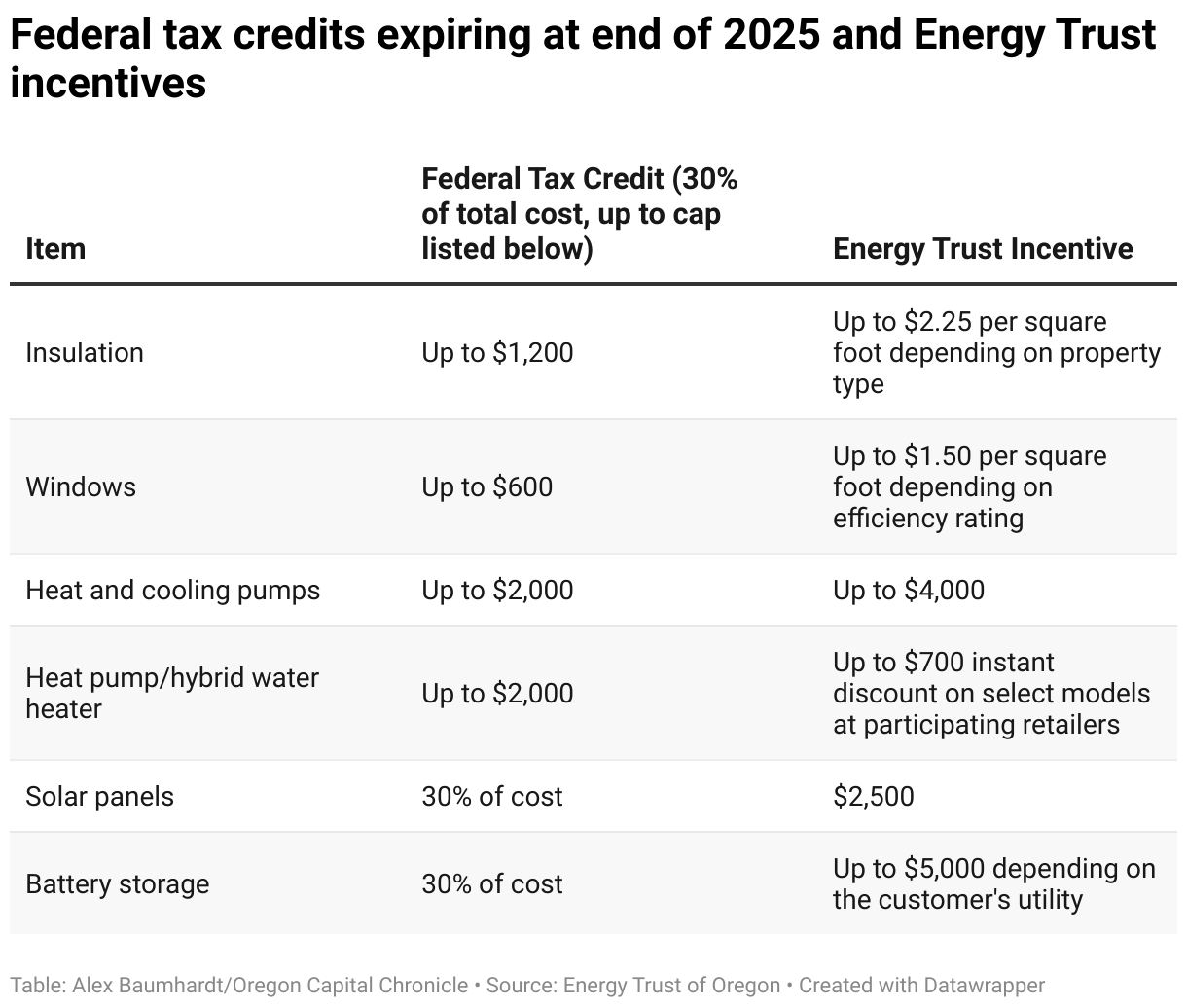
https://www.oregon.gov/osp/missing/pages/missingpersons.aspx
Oregon’s Missing Persons
Many times you’ll see postings without case numbers or police contact. There is rarely a nefarious reason why (the nefarious ones are pretty obvious). Usually the loved one tried to call to report their missing person and they are either refused or told to wait a day or two by people who are unaware of SB 351 and the laws that they are bound to when answering the phone. Many people don’t bother calling LE if their loved one is homeless or in transition because they believe LE won’t care. The biggest myth is the 24 hour rule.
In Oregon we don’t have those rules and an officer or person answering the phone is not allowed to decide. The law decides. We have Senate Bill 351 and it states that the police CANNOT refuse a request for any reason and they must begin working on it within 12 hours. The person making the report does not have to be related to missing person either.
Here is SB 351 written by families of the missing here in Oregon in conjunction with Oregon law enforcement officers. This should be common knowledge, please make it this way. https://olis.oregonlegislature.gov/…/SB351/Introduced


Contact us: Info@OregonBeachMagazine.com